

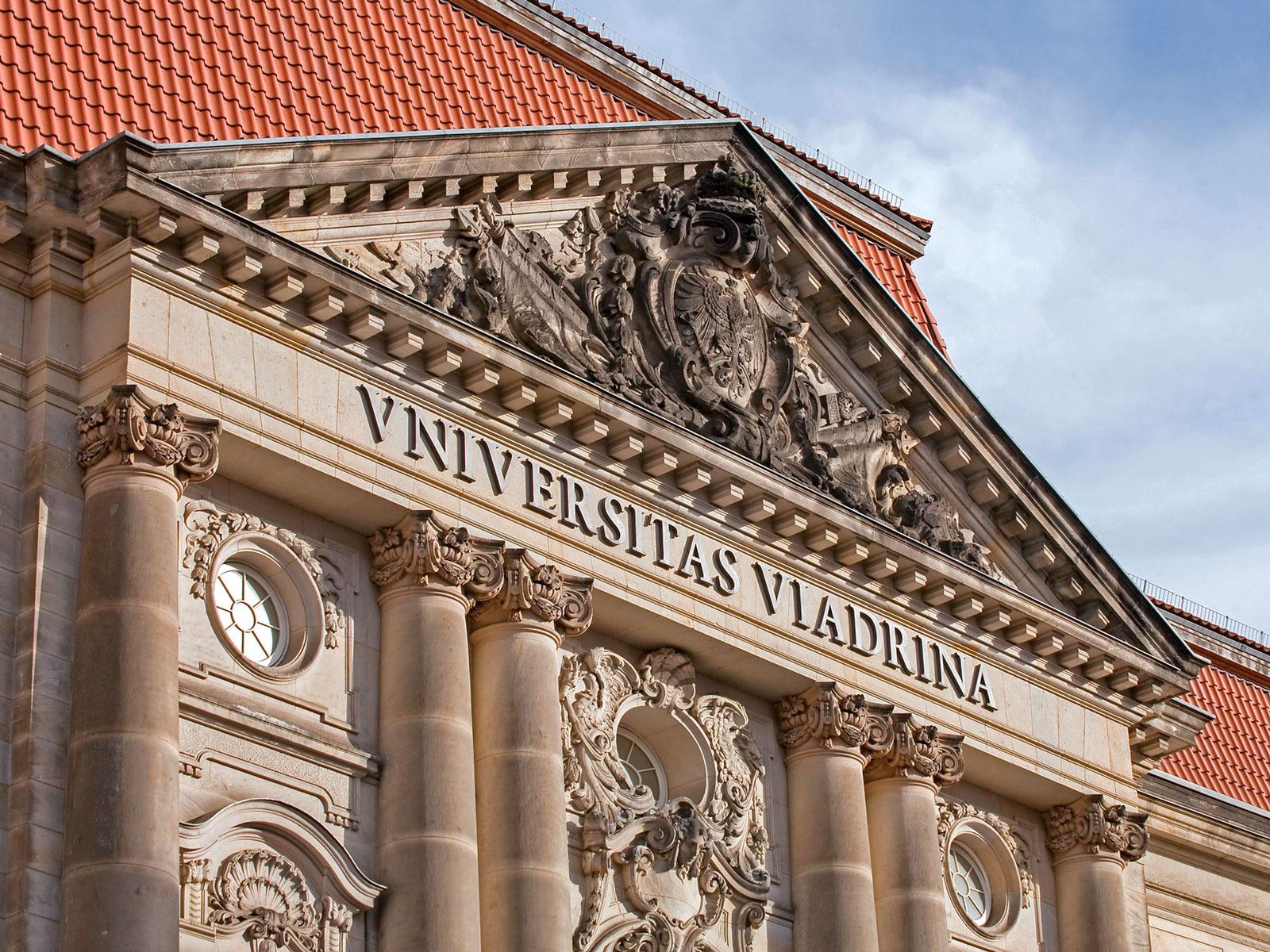
The aim of the regional history laboratory Terra Transoderana is to bring regional history to life and make it tangible across the German-Polish border. The project of the European University Viadrina Frankfurt (Oder) and the University of Zielona Góra is being funded over three years with around 920,000 euros as part of the European Union's Interreg VI A Brandenburg – Poland programme. The project will develop and test educational formats, methods and specific handouts for cross-border educational work on regional history. German and Polish museums, schools and history initiatives will be involved.
Due to the relative border closure between Germany and Poland for over 40 years – and despite their opening after 1989 – knowledge and perception of the shared history and cultural heritage of the historical area of East Brandenburg and the Lubusz region until the end of the Second World War, as well as the history of the region after the war, have largely been lost in today's consciousness or have been told little to each other, according to the initial observation of the applicants. "The memory of the Second World War, the crimes of the Third Reich, the shifting of borders and, in particular, the flight and expulsion as well as other forced migrations make it difficult to recognise the region's shared history," says Dr Magdalena Abraham-Diefenbach from the European University Viadrina. At the same time, this history is not only of local significance, but is exemplary for the European history of the 20th century.
In order to promote this knowledge and strengthen the transfer, new methods for teaching, scientific cooperation and communication will be developed and tested as part of Terra Transoderana from July 2026. These include a history game, an educational trip for school pupils and an international summer academy for students. The joint formats aim to open up the topic of cultural heritage in the region and incorporate regional narratives into the respective work. In addition to staff from Viadrina and the University of Zielona Góra, experts from museums as well as German and Polish history educators will be involved.
The project is based on more than 20 years of experience of the Institute for Applied History – Society and Science in Dialogue e. V., which was founded by Viadrina students. The project's partners also include the cities of Zielona Góra and Frankfurt (Oder), the Museum of the Lubusz Region (Muzeum Ziemi Lubuskiej) in Zielona Góra, the Viadrina Museum, the Brandenburg Museum Association and the German-Polish House in Berlin.