

BMFTR funds AI-DISCO with 15 million euros - open platform to bring energy-efficient AI to where data is generated
Frankfurt (Oder): The Federal Ministry of Research, Technology and Space (BMFTR) has approved funding of 15 million euros for the AI-DISCO – Edge Cloud AI for Distributed Sensing & Computing project. AI-DISCO is the first module of the R+I Factory (Research and Innovation Factory AI & Microelectronic), a novel, nationwide, modular research and innovation structure at the interface of artificial intelligence and microelectronics. The consortium leader is the IHP – Leibniz Institute for Innovative Microelectronics.
Modern applications are increasingly utilising the analysis of data in real time – in smart cities, in critical infrastructure, in Industry 4.0 or in energy supply. At the same time, energy requirements are rising sharply when large amounts of data are transferred between applications and data centres. This is precisely where AI-DISCO comes in: The project is developing an open, reconfigurable platform for energy-efficient, distributed AI processing at the interface between the edge and the cloud.
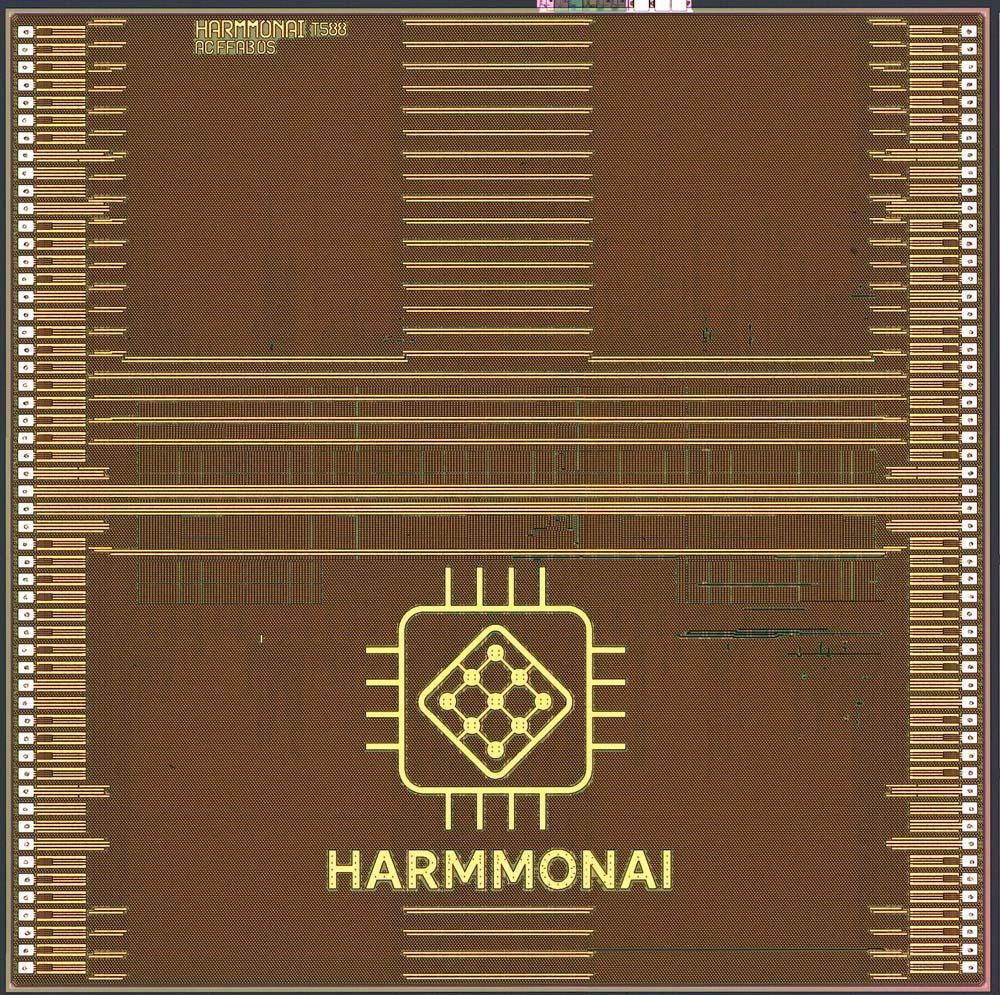
The idea is simple: intelligent edge nodes process sensor data, for example, directly where it is generated - locally, in real time and without unnecessary data transfer. This allows the system to save energy, reduce latency and better protect sensitive data. Only the essentials are shared with the cloud. AI-DISCO builds on various preliminary work and developments, including HARMMONAI acceleration, an RRAM-based AI accelerator and a new type of spiking neural network architecture. The technical basis includes RISC-V-based edge hardware, which is enhanced with energy-efficient AI accelerators, as well as methods such as federated learning (distributed learning, i.e. AI learning without centralised data collection) and approaches from neuromorphic AI. Topics such as integrated communication and sensor technology (ISAC/6G) are also addressed as a field of application.

"AI-DISCO is more than just a research project - it is the starting signal for a new way of thinking about AI and microelectronics together. We are building the technological foundation for this in Lusatia."
Prof. Dr Milos Krstic, Project Manager AI-DISCO, IHP
The AI-DISCO project is the first approved module of the R+I Factory – a modular research and innovation project that strategically promotes the combination of artificial intelligence and microelectronics and explicitly addresses economic value creation and location development in the region. The initiative contributes to strengthening Cottbus as a research location by pooling expertise, facilitating cooperation between science and industry and enabling application-oriented developments for regional companies and infrastructures. The AI-DISCO consortium consists of the IHP (Frankfurt (Oder) and Cottbus), the BTU Cottbus-Senftenberg, the German Research Centre for Artificial Intelligence GmbH (DFKI), the Fraunhofer Institute for Photonic Microsystems IPMS and the Leibniz Institute for Neurobiology (LIN) as well as the industrial partners ABB, ENERTRAG and Perinet. Strategically, the R+I Factory is designed in such a way that further central focal points at the interface of AI and microelectronics can be addressed in future modules – such as AI for microelectronics production, AI for circuit and algorithm design, energy-efficient microelectronics for AI applications and time-critical systems.
"With AI-DISCO, the first module of the Research and Innovation Factory, we are bringing together microelectronics and artificial intelligence in a targeted manner. The aim is to create unique technological features and new application potential for the regional and national economy. Together with partners who are already located in Lusatia and new partners who are settling there, we are contributing to the further dynamisation of Cottbus as a research location with the R+I Factory."
Prof. Dr Gerhard Kahmen, Scientific and Technical Director, IHP

Microelectronics and artificial intelligence are key technologies that the German government is specifically pursuing in the High-Tech Agenda published in July 2025. The R+I Factory thus contributes to achieving the goals defined there, such as technological sovereignty and the rapid transfer of research into application.
About the R+I Factory:
The R+I Factory (Research and Innovation Factory AI & Microelectronics) is a modular research and innovation project at the interface between AI and microelectronics in Lusatia. AI-DISCO is the first approved module.
About the IHP:
The IHP – Leibniz Institute for Innovative Microelectronics, based in Frankfurt (Oder) and Cottbus, conducts research into silicon-based systems, high-frequency circuits and new materials for microelectronics and nanoelectronics. Its developments are used in wireless communication, medical technology, Industry 4.0, mobility and aerospace. With over 400 employees from more than 30 nations, the IHP is one of the world's leading research institutions in the field of applied microelectronics. The institute is jointly funded by the federal government and the state of Brandenburg with around 35 million euros annually.
www.ihp-microelectronics.com

Terms briefly explained
RISC-V: Open processor architecture as the basis for chip designs.
Edge hardware: Computing hardware close to the data source (compact, robust, energy-efficient).
AI accelerator: Specialised hardware that makes AI calculations faster and more energy-efficient.